Dear Mr. Smart E-Pants, I have recently been asked by my management to incorporate more creative seating arrangements into all of my programs. We have been using a lot of theater and classroom-style seating up to this point. Do you have any suggestions to help me with this transition? —Andrea Smith, Jackson Hole, Wyo.
Andrea, what may feel like an unnecessary burden placed on you by management is actually a blessing in disguise. You may be thinking how can extra work be a blessing when you have to arrange X number of people into what seems like too small of a space—and with what you know is too small of a budget. The answer is that seating has a tremendous impact on your audience, and getting it right can greatly increase the productivity of your program and the retention of information of your attendees. In short, seating matters.
Attendees (unlike the planner) spend the majority of their time seated from seminars to lunches, so more effective and creative seating could really transform an event. We have all sat through a dreadful seminar where everything was focused on the visuals and no matter how your craned your neck, you could not see the screen for the life of you. Information on seating is readily available, but one of the most thorough resources that I’ve come across is Seating Matters by Paul Radde, Ph.D. Dr. Radde is a keynoter, author, psychologist and expert on "thriving" (what he defines as the highest sustainable life style). He takes you through creating a seating arrangement from start to finish, and will help you to create audience-focused seating.
Your audience is your biggest customer, and the more comfortable, engaged and included they are, the more they will learn, participate and return to your future programs. In his book Dr. Radde outlines the Audience Member’s Bill of Rights, which he believes all meeting attendees are entitled to and should be kept in mind for all seating arrangements. This includes sightlines, comfort, ease of access, safe exit, meeting, networking opportunities, and special needs and requirements. Other considerations for seating include presenter range of motion, screen height, columns, cameras and other obstructions. Move away from a traditional seating arrangement where the chairs are arranged in straight lines toward a more engaging audience-focused arrangement that focuses on comfort and sight lines such as the elliptical design. For seating in large lecture halls avoid straight line seating for all rows expect for the rows directly in front of the presentation. Angle or curve the seats toward the focal point to increase visibility and comfort.
His book also offers sketches of different room arrangements where it connects the seats to the focal points to check on line of sight—I recommend that you do the same for your events. If you address all the areas in the Audience Member’s Bill of Rights you will be able to move away from the traditional seating methods and produce greater ROI from your programs.
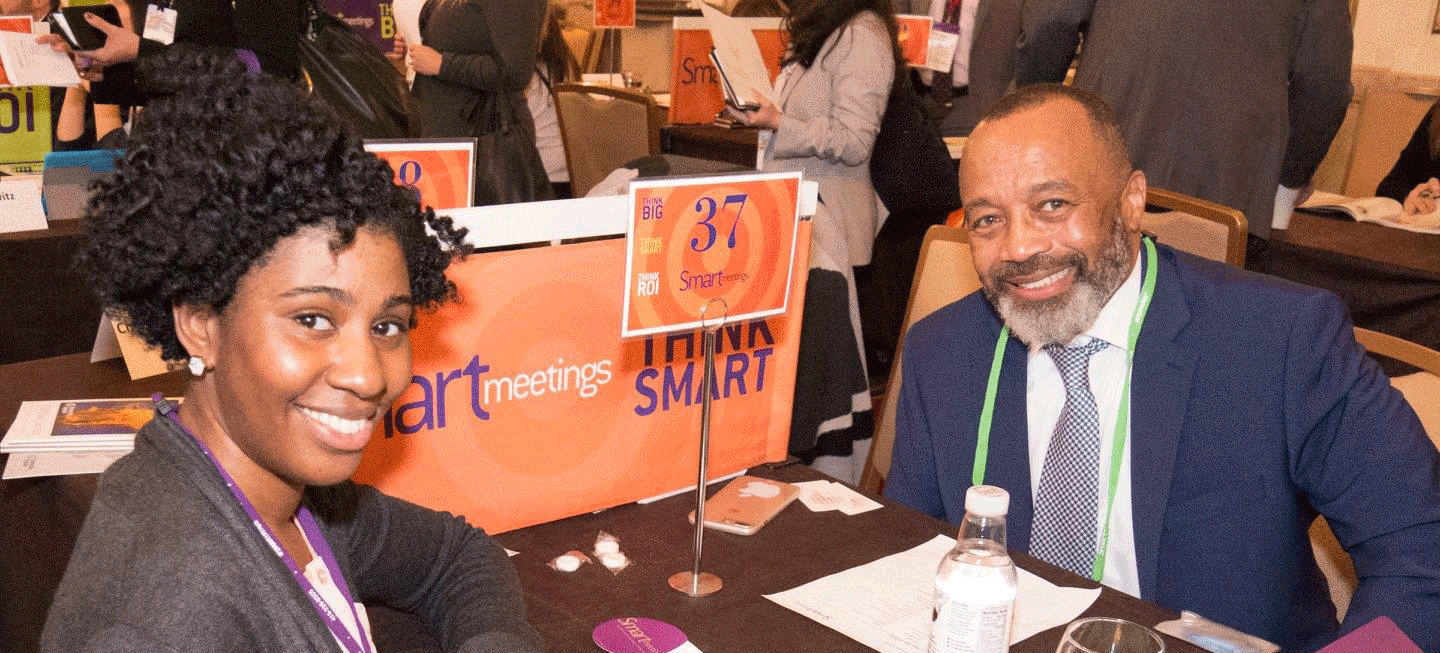
Seating can also make a statement. At the most recent Smart Mart at the Four Seasons San Francisco, we selected to have a dramatic, long table for an 80-person seated dinner. It definitely made an impact on our guests and caused a lot of buzz in the room. However, this type of seating is best for a meal or a more networking-type function, as its visibility can be limited for presentations.
I would also recommend sitting in on as many meetings and events as possible. Place yourself in the position of the attendee. Take notes on what works, sit in different places around the room (can you see and hear from that position?), sketch out possible seating patterns for your selected space and incorporate your notes into your program. Once you have selected a venue, use the venue’s event/sales staff as a resource as they will have probably arranged many different seating patterns.
I hope this gives you a jumping off point for unconventional seating. Good luck!
For more information or to order a copy of the Seating Matters visit Dr. Radde’s website.
Mr. Smart E. Pants is none other than our own energetic meeting and event manager Benton Partin. With a diverse background and 10 years of planning experience, Benton brings a unique and creative approach to meetings management. Have a burning question for Mr. Smart E. Pants? E-mail him at ben@smartmeetings.com.